Buy your weekday smoothies and get your weekend ones for free. (7 for the price of 5!)
WELLNESSWEEK

Are you old enough to drink whiskey?
You must be of legal drinking age in your respective country for entry. By entering you accept our Terms and Conditions and our Privacy & Cookie Policy. We encourage drinking responsibly.

Edward Borein never set out to become the most documented cowboy artist of his generation. He simply went where the work was — riding alongside vaqueros on the Santa Barbara ranches, sketching the men and animals that made up his daily world. The result is one of the most honest visual records of California ranch life ever committed to paper.
Born in San Leandro in 1872, Borein found his way to the Central Coast in his early twenties. He took work as a vaquero on the Las Flores Rancho, then moved between outfits along the coast — Hollister, Cojo, Jalama. His sketchbook went everywhere his saddle did. By the time he settled in Santa Barbara two decades later, he had filled hundreds of notebooks with quick studies of ropers, horses, brandings, and the vast oak-studded country that gave them all their living.

Skecthes that inspired the Ranchero logo.
What set him apart wasn't technical mastery, though that came in time. It was that he understood the work from the inside. He had pulled calves out of mud and broken his hand on a fence post. The men he drew didn't sit for him; they tolerated him because he was one of them, sketchbook or no sketchbook. The drawings show it. Nothing romanticized, nothing softened. Just the work, exactly as it happened.
He had pulled calves out of mud and broken his hand on a fence post. The men he drew didn't sit for him; they tolerated him because he was one of them.
Born in San Leandro in 1872, Borein found his way to the Central Coast in his early twenties. He took work as a vaquero on the Las Flores Rancho, then moved between outfits along the coast — Hollister, Cojo, Jalama. His sketchbook went everywhere his saddle did. By the time he settled in Santa Barbara two decades later, he had filled hundreds of notebooks with quick studies of ropers, horses, brandings, and the vast oak-studded country that gave them all their living.
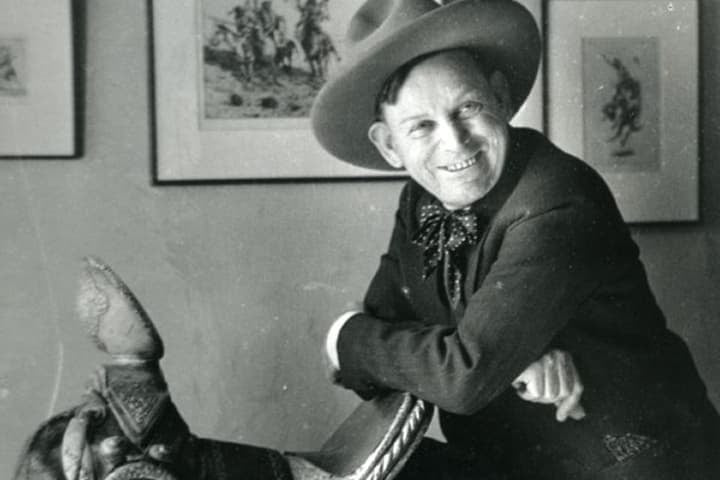
 Borein at his Santa Barbara studio.
What set him apart wasn't technical mastery, though that came in time. It was that he understood the work from the inside. He had pulled calves out of mud and broken his hand on a fence post. The men he drew didn't sit for him; they tolerated him because he was one of them, sketchbook or no sketchbook. The drawings show it. Nothing romanticized, nothing softened. Just the work, exactly as it happened.
FROM THE FIELD
Field Dispatches are notes from the country that shapes Ranchero. The people, the work, the places where things are still made by hand and made well.
We share these stories because the spirit in the bottle isn't separate from the spirit of the land. One pours from the other.
RANCHERO FIELD MANUAL, EST. 2026
Get the latest from Ranchero: new releases, events, and dispatches from the field.